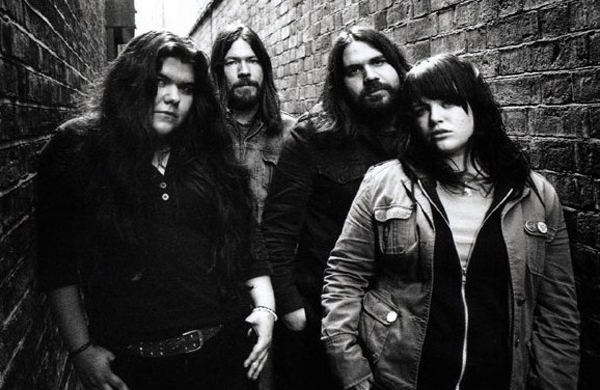
INTERVIEW: Hunx & His Punx (USA), January 2013

Yep, another Q&A. I think I was reading a lot of Rolling Stone at the time and was trying to mimic their conversational Q&A style. I’m not so sure it suits me, to be honest. I did love chatting with Mr. Hunx, however. His band are fantastic fun. This tour in particular was an obscene amount of it. This interview is pretty silly; I giggled a lot going back and looking at it.

– DJY, October 2014

***

What a month to be a queer punk in Australia! Just weeks after a blistering tour from bear-friendly hardcore queens Limp Wrist, the Ramones-esque proto-punk of Hunx and His Punx have just touched down in the land of Oz for the first time ever. While here, the band will perform at both the Sydney Festival and at Sugar Mountain in Melbourne, amongst other headlining shows. We got on the phone with Seth Bogart – aka Hunx, the band’s fearlessly fabulous figurehead – to discuss new material, new homes and inappropriate zoo visits.

Hi, Seth! Where are you taking this call from?

I’m in my apartment in LA. I really love it here, it’s really nice! Everyone’s really hot, the weather’s really hot. It’s a really big city, too. I dunno, it’s just fun!

Well, enjoy LA while you can – it won’t be long before you’re here in Australia with us!

Oh my god, I can’t wait! It’s been so long. I’ve been wanting to come and see you guys for three years now. I’m so excited!

Tell us a little bit about the line-up of H+HP that you’ll be bringing with you for this tour.

Well, Shannon and Erin – who have kind of always been in the band – are coming. This guy Frankie, who is kind of a weirdo, is going to be playing guitar for us. The other two girls we had playing guitar for us got pregnant.

Wait – at the same time?

Yes! It was a real inconvenience!

What’s so weird about this new guy, anyway?

He’s just kind of perverted. He has, like, a massive foot fetish, too. He’ll be like taking pictures of our feet while we’re sleeping and stuff. He’s really hot – but I have a boyfriend and Frankie’s straight; so it’s kind of difficult.

You’ll be bringing some new material out on this tour, is that true?

We’ll be playing songs from all three albums, and we’re in the middle of writing a new record at the moment called Street Punx. Hopefully we’ll have some of that new material for you by the time we get there.

What is the new album sounding like?

It’s MEGA punk. The more I was playing fast, fun songs with the girls, the more we were enjoying them. So we just started writing like that. Plus, I was pissed off at a lot of people and needed to get some things out of my system, get some anger out. I just started writing mean songs. I’ve always loved The Germs, and I always wanted to make a California punk record – and now is my chance!

Have you guys had much of a chance to run through what you’re going to play in Australia?

Well, to be honest with you, we live in four different cities. So we don’t really play that often. When was the last time we toured? I think… [trails off] …oh, we played a couple of shows about four months ago and that’s been about it. Shannon and I just write songs at the moment in our bedrooms and just send them to one another. We haven’t even really rehearsed yet – so, I don’t know! I’m sure it’ll all work out by the time we get to Australia. I think we’re playing a skate park the day before we leave, so we’ll sort it out then.

The band have always been known for some provocative imagery and aesthetics – from the cover of the Gay Singles compilation to the band’s videos. Do you feel that you’ve drawn a lot of people in over the years because of the band’s aesthetics?

I would hope so! I just like the way things look. I just love being involved with things like the artwork, y’know? I mean, there’s one side of me that just wants to get up on stage and be punk and go crazy and stuff like that; and there’s also this other side of me that’s like a grandma – really into arts and crafts [laughs]. I want what people see on the outside to reflect the band and reflect the sound. I also don’t trust people in bands that don’t do art. I just find it weird if you’re in a band and you don’t know how to make it look the way it sounds. You really need to be involved with the entire creative process in order for it to totally work.

Hunx and His Punx seem to have always taken their sounds from everything from the Ramones to the Ronettes in their music. Have you ever felt a difficulty fitting into a “scene” – being too pop for punk and vice versa?

I don’t think we really fit in anywhere, really. We’re too “gay” for punk, and we’re too punk or too rock for most gay shit. It’s all the same, really. We’re just about being ourselves. It’s cool if you don’t fit in. I love it at our shows when there’s the big tough punk guys standing next to the weird teenagers and the gay guys. It’s so weird, and it’s so awesome. I’m so excited to see what our Australian audiences are going to be like.

Do you have any ideas of what to expect on your first trip to Australia?

I just want to see a kangaroo’s boner! After that I can sit back and relax.

INTERVIEW: Sammy J (AUS), April 2012

It’s rare that I get to do non-music interviews – well, Sammy’s definitely a musician, but in the realm of comedy. You get what I mean. Anyway!  He’s a fantastic guy and a great interviewee. This is a Q&A format; which isn’t preferable but I guess it suited the chat a bit more. Sorry about that. Blame my past self!

– DJY, October 2014

***

The skinny man. The piano dude. That guy with the juice box. That weirdo with the puppet. He’s known to Australian audiences under a myriad of guises, but all of these attributes combined don’t even come close to covering Sammy J. He’s one of the hardest-working entertainers and one of the most unique minds working within Australia’s comedy circuit – and, in direct collaboration with puppeteer Heath McIvor, he’s created an ingenious odd couple in the form of Sammy J and Randy. The two are currently performing their third show under the moniker, The Inheritance; and we spoke to Sammy J himself about the new show, working with a puppet and the most unlikely place for a comedian to succeed in this country.

Hey Sammy, how have the shows been going so far at the Melbourne International Comedy Festival?

Sammy J: They’ve all been pretty fun! There’s been no stinkers. Y’know, normally in the festival, you have a show or two that make you question your entire career choice. Maybe that will be tonight, now I’ve said that…

How long have you been performing The Inheritance now?

We opened it at the Adelaide Fringe in February, so we’ve probably got about 40 shows under our belts so far. In Melbourne, we’ve been doing it for the past 2-and-a-half weeks, with one-and-a-half to go. It’s been great. Our festival year starts in Adelaide, then goes Melbourne, Sydney, Perth and then over to Edinburgh in August. It’s quite a long stretch, so it means that we get constant incentive to make the show better. You don’t just sit back and relax – you’ve got new cities to win over!

With that said, how much has the show changed since it debuted in Adelaide?

A fair amount. My mum saw the show last night, and she saw the trial show back in January when we put it on for our friends and family. It was just a balls-up, that night. Everything was breaking, sets were falling over… so she confessed after the show last night that she’d been quite nervous when she sat down at the Forum with all these people there for a show that might not be all that good. [Laughs] We picked it up, did a lot of changes. The drive home from Adelaide to Melbourne each year is a very productive time for Randy and I – we do a lot of rewriting, we go through jokes that we don’t like and we cut some scenes out. It’s humming along now. The engine has been tuned, and we’ve put a few new seat covers on and stuff; to continue that metaphor.

Stephen Colbert is a comedian that’s best known for portraying the character of Stephen Colbert in his shows. It’s somewhat similar to what you do – you’re Sammy J, but you’re also playing a character in these festival shows called Sammy J. How different is the person on stage to the person you might meet in the street?

You’re right – I call myself Sammy J because it’s a nickname, rather than a character name. It’s what my friends call me and stuff. I think it’s just an exaggerated version of me – and I mean extremely exaggerated. Sammy J on stage will happily kill a dude or fuck a puppet and won’t really think too much about it. I mean, I still kill dudes and fuck puppets, but I do feel bad about it in real life. And I’m far more discreet.

We can only imagine that Heath isn’t as foul-mouthed when he doesn’t have a puppet on the end of his hand…

We’re both fairly tame. As much as we swear on-stage, every single “fuck” and “cunt” in our show has been put through a meticulous quality control process, and it’s there purely to serve the joke.

This is your fourth show with Heath, and the third show as Sammy J and Randy. Now that you’ve done this many shows writing with Heath in mind, do you think you’re more confident about writing with both of these characters as opposed to just putting a bunch of songs together and saying “that’ll do”?

Definitely. We’ve definitely learned a lot more about the characters, and how they interact with one another and the world around them. Having said that, we take longer and longer writing our shows now – we feel like we have more options and slightly more pressure to not fuck up. When we wrote The Forest of Dreams, we literally just sat around and made each other laugh for two weeks. We didn’t think that many people would see the show – and then, suddenly, we’re off to London and Edinburgh and doing the show all around the place. We knew we had to step it up from then on in. But, yeah, as far as writing goes, it’s still us trying to make something that we find funny – but it’s also balance that with not wanting to bore a crowd, as well. I’m very happy for people to hate my guts, but I’d hate to think that we’re doing something boring.

Is it very much a collaborative process, or do you still view these shows as your own?

It’s easily collaborative. We write everything together. When we’re writing songs, I’ll sit down at the piano and Heath will be there with me. Because we’ve still got our solo stuff on the side, we’ve got that outlet as well for whenever we want to be complete control freaks. When it’s together, though, we’ve both still got the same goals in mind. We battle it out, and it’s very rewarding.

With The Inheritance, it would have been clear from the start that you needed to make something better than Bin Night, but also something that was fresh and unique. What inspired the writing of The Inheritance?

With Bin Night, our challenge was to write something that was set over one evening. It was us, standing in the front yard of our house – and that was it. It was our bottle episode, if you will; a complete mind-fuck of a show with a lot of dialogue. Having achieved that, our direction turned to the complete opposite so that we could make something as epic as we could. In this show, Randy’s uncle dies in England – it happens in the first few minutes of the show. We go over to England to claim the inheritance, so it’s kind of the opposite of Bin Night. It takes place over a couple of continents and a couple of months. There’s some pretty big things at stake here, too – ghosts and family history and stuff. We pretty much did a 180 – we wrote a film script, to be honest – and thought we’d see where it would go from there.

Obviously, there is a bunch of new songs in The Inheritance written by you and Heath. When it comes to performing away from the festival, do you look at the list of songs you’ve just written and say to yourself “Fuck, I can’t use any of these songs out of context!”?

[Laughs] That is actually a legitimate concern. When you’re writing a show like ours, you don’t want the songs to stand out like dog’s balls. You want to have them within context and driving the show forward. The problem is, as you say, that you just can’t pull them out whenever you feel like it. It also means that when the people come along to the shows, they haven’t seen the songs on TV or whatever – so hopefully that means that there’s something fresher about them.

It’s worth mentioning that you and Heath recently re-wrote the opening song from Bin Night for your opening number hosting the Melbourne International Comedy Festival Gala. How did that come about?

Yes, indeed! I’m glad you actually picked that up. That was sort of our idea, because even though we had great numbers for Bin Night, it was still only a couple of thousand versus a couple of million watching on TV. When they asked us to host, we had to work out just how we were going to do it. People watching at home probably didn’t know us that well, if at all. We thought that one good way of doing that would be to latch ourselves onto a well-known comedian. So we asked Adam Hills, and he agreed to be involved. We then concocted this idea of how he was the “true” Gala host, and we would kidnap him in order to take his place. It was pretty cool, getting to whack Adam Hills with a brick. [Laughs] He literally flew in for 37 minutes to give us his time because he was shooting his ABC show. It was very helpful. He’s a gem.

What does the rest of the year have in store for Sammy J and Randy? Do you plan to write a sequel to the show? Maybe work with some new characters, or continue under the same moniker?

The Inheritance actually brings in a significant new character, which I won’t give away but you’ll see at the show. After Edinburgh, we’re planning on focusing more on our TV plans. Randy and I would like to do our own sitcom-type show. It’s a pipe dream at the moment, but we figure at some point you’ve got to make things happen. So we’re taking a few months off to just write that and then start hawking it around to networks and so on.

Would it be similar to your skits on Good News World?

I think it will have a similar sense of humour, but at the same time we’d like it to fit into more in a real world sort of setting. Less studio-based and more of us living in an actual shithouse.

It was also mentioned on The Little Dum Dum Club earlier in the year that you will have another project out soon in the form of a human life?

There is a human life I’ve been working on now, it’s making its debut in 2 months’ time. It’s not like a show – there’s nothing I can do now to make it any better. I did my job seven months ago, and now it’s like waiting for a film to be released. I think I did a fine job at the time, but I guess we’ll find out, y’know? The child in question will be accompanying me to Edinburgh in August, so it’s going to be a well-travelled baby!

Imagine being a jetsetter before you’re even turning one!

[Laughs] I don’t know how else to make money, so I thought that we should just do it. The poor bastard is being born in to a comedian family.

Do you think Randy would be a good godparent?

Look, I couldn’t think of anyone less equipped in the universe to guide a child through moral quandry than Randy. I’ll be keeping a couple of kilometres’ distance between them.

Just before we go, would you do us the honour of pissing off every other city in Australia and putting your money on the best place to perform comedy?

I would have to answer this question simply by pointing out that one can only decide on their favourite comedy city based on their own experience. Now, Melbourne is my hometown and I love it dearly. I’ve done 90% of my gigs here. Of course, that also means that I’ve had my bad gigs in Melbourne, as well. Sydney and Adelaide, both equal highs and lows. One city that I’ve always had good shows in, though, is the lovely roundabout-ed city of Canberra. I’ve only performed there four or five times, but each time has just been wonderful. So, simply from a percentage point of view, I would have to say that Canberra is my favourite city to perform in. I’m going there in a few weeks to launch my solo album, so we’ll see if it retains the crown.

What can you tell us about the album?

It’s a collection of songs that I’ve been performing solo for the past few years. It’ll be a bit of fun, it’s coming out on iTunes and that sort of thing. It’s called Skinny Man, Modern World.

Genius. We’ve got a new Dark Side of the Moon on our hands.

Indeed. That was my very humble ambition.

INTERVIEW: Cannibal Corpse (USA), April 2012

I love the contradictions, paradoxes and contrasts that are omnipresent in the world of music. Here’s one: one of the nicest bands you’ll ever interview is Cannibal Corpse. Yeah, the “Hammer Smashed Face” band. Those guys. Yeah, they’re the most chill fucking dudes out. No kidding! I get into that a bit with the opening paragraph, but you’ll totally see what I mean. I really like this feature; I think there’s some good insight into the band and the semantics behind what it means to be a horror-oriented death metal band. 2012, for me, was a time where I was starting to really come into my own as a writer – looking back on it, anyway. See what you think.

– DJY, October 2014

***

Degrees of contrast often come in rapid succession between what an artist portrays through their work and what they are actually like in real life. That folk singer calling to an end to the war? He probably only heard about it yesterday and couldn’t care less. That rapper claiming that your arse will have caps busted into it? Never used a gun in their life. Conversely, that guy in the death metal band, jamming out numbers about necrophilia, chopped up bodies, zombies and horrific murder? Laid back, charming, funny and intelligent.

At the very least, such is the case with Cannibal Corpse. It’s a band that means so many different things to so many different people, ranging from the pioneers of a bullshit-free, enraged death metal sound to the scourge of society. It’s something that Pat O’Brien – the lead guitarist of the band from 1996 onwards – is more than aware of. Hell, it’s probably something that he embraces. Speaking to the AU Review on the line from Tampa, Florida in-between European and North American tours, he vents a frustration at the band’s misrepresented public image and the double standards within mainstream society that turn them into the villains.

“I think only a few people really want to bring that up with us anymore,” he says. “I think Alex [Webster, bass] would be the first to say that, as far as politics go, we’re not a political band. It’s just metal. The shit that I see happening on TV every day, and the shit I read about? We’re nowhere near as creative as some of the fucked-up shit that happens in real life. Take September 11 – if someone made a movie about that, everybody would walk out thinking that it was a crock of shit, that it would never happen. And then it did. It blows you away, the stuff that happens in real life. You can go and buy German porn – scat videos or whatever the fuck – but you don’t want to stock and sell Cannibal Corpse CDs?”

Our discussion turns to the hypocrisy of individuals that read Stephen King novels or listen to murder ballads that attempt to portray the band as vile, inhumane or demented. “We write fictional stories in our songs,” O’Brien explains. “If anything, they should censor the news. Nobody ever brings up movies, either – you make a movie about zombies, it’s totally fine. But if you’re writing a song, it’s like you’re raising a flag to it; singing a national anthem about violence or something. We’re not preaching anything. We’re just writing lyrics about basically nothing.”

These songs have been seen through the cracks of mainstream culture, from the band’s cameo appearance in Ace Ventura: Pet Detective to a lounge version of their song being played by Andrew Hansen on The Chaser’s War on Everything. For the most part, however, the band have stuck to making music for their extensive cult fan-base, who flock to see them across the world in the thousands. Their latest effort, Torture, is their 12th studio album, and their first since 2009’s Evisceration Plague. Ever the critic, O’Brien looks back on the record with mixed feelings.

“I thought it was a good album,” he says. “I think it was something that we needed to do in order to get to the point that we are now with Torture. It was the first time that Paul [Mazurkiewicz, drums] had played to a click track. I dunno, I still think it’s a really good album; but it seems like it was maybe a little stiff at times. This one feels a lot better to me.”

So, where does the difference lie between the band that made Evisceration Plague and the band that made Torture? As Pat reveals, it was a matter of a freshly democratic songwriting process and a clearer, more focused mind going into the album’s creation. “I wrote more songs on this record, and so did Rob [Fischer, vocals],” he says. “With Evisceration, it was Alex – he just had an abundance of material written. He’s like a writing machine. That was a weird time for me – I was moving, and I had a lot of personal shit going on; so I was having trouble writing riffs. This album, though? I was the first person to write for this record. I wrote ‘Followed Home, Then Killed’ and ‘Torn Through’ before we’d even started the writing process collectively.”

O’Brien explains that this new hunger to write would often stem from extensive time on tour which was not spent on the stage. “When we tour, the only thing for me to do, really, is play guitar,” he says. “It’s either that, or drink all night and feel like shit the next day. Even though it’s fun to be out on tour, and see and do all these things, you still have a lot of downtime. It’s a game of “hurry up and wait” – like, wait around for hours, all day, just to play. I can’t do that, man. Give me a guitar. Let’s get some songs in the bag.”

Of course, letting things unfurl naturally lead to some obstacles in the creation process of Torture. O’Brien received the opportunity of a lifetime when one of the band’s biggest influences called upon Pat’s guitar work. As he explains: “I got the call from Slayer to fill in for Gary Holm. That kind of threw things off in the writing process, but it’s not every day you get called up to do that. I’m not sure, exactly, how it came about. I think there were just some recommendations from different people, and I guess I must have been the only one available to do it at the time. It was about a week-and-a-half to learn all of the songs – a lot to learn in a short period of time. With the whole metal community watching these massive shows… it was just intense.”

He goes on to explain the difficulty of learning another band’s entire setlist in such a short period of time. “I knew a lot of the Reign in Blood stuff, but I hadn’t sat down and tried to play those songs for years,” he says. “The only time when I would have really been trying to play them was when I was giving guitar lessons back in the day. I don’t really play other people’s stuff, y’know? I just kinda do my own thing. It was definitely a challenge, for sure.”

This year marks the sixteenth year that O’Brien has been a part of the band. While many older artists feel as though their youthful days best reflected their love and passion for music, O’Brien feels that moving into his forties has allowed him to grow even more engaged with the band and their music. “I think it’s actually gotten better now,” he says on the motivation to create new material. “Like, back in the day, I wouldn’t be able to come up with anything – I’d pick everything apart so damn much that it would kill the idea that I had initially come up with. I’m at a period right now where I don’t totally do that. I’m able to kind of write what I feel and not be so uptight about it.”

He concludes with a positive appraisal of where Cannibal Corpse are currently at – even with nothing to prove, they still strive for excellence within their work. “We always want to make the best album that we can make,” he affirms. “If there’s one thing that I can honestly say, it’s that we are a band that constantly improves in one form or another from our past albums. I really believe that. Some bands, they come out with one or two great albums and then it gets to the point where nothing they do compares to their older albums. I think we’re the opposite. I think our albums keep getting better and better.”

INTERVIEW: Passenger (UK), February 2011

I can honestly say that of every artist to completely explode on a global scale of the past few years, no-one has deserved it more than Mike Rosenberg. All the dude has ever had is a guitar and some dreams. Now he’s playing arenas. How many people get to say that? Like, make what you will of the guy’s music. It’s not for everyone – or, maybe, some people don’t like it because it is for everyone. Whatever the case, you’ve got to hand it to the guy for his goddamn hustle. I’ll always love Mike, and interviews like this are one of the many reasons why.

– DJY, October 2014

***

Mike Rosenberg doesn’t do interviews. This isn’t to imply that he is stuck up or pretentious or anything of the sort. Rather, when Rosenberg – better known to most as Passenger – is scheduled to do these “interview” things, he throws that idea out the window and engages you in conversation. None of this I’m-an-artist pedestal – Mike, an expat Brit who now spends most of his time in our fair country, is just an ordinary guy who just happens to make extraordinary music.

“I’ve been pretty busy, man,” he says when it comes to his work as Passenger. “Lot of touring last year -did shows with Boy & Bear and then my own tour, which was cool. I did Woodford [Folk Festival] in the new year, did some shows with Josh Pyke, lots of busking, writing, recording…just smashing it, man. It’s been good fun, though!”

Perhaps it’s this level of activity and productivity that has kept Passenger’s profile growing at an exponential rate. Additionally, perhaps it’s his warm and friendly nature that has seen him buddy up with some of Australian music’s biggest names on his second studio album, Flight of the Crow. Every single song is a collaboration with another act – from Philadelphia Grand Jury to Dead Letter Chorus, from Katie Noonan to Kate Miller-Heidke, Matt Corby, Lior, touring buddies Josh Pyke and Boy and Bear… it just goes on like this. Sure, he’s probably been asked a thousand times over but how exactly does one go about making such fast friends?

“Well, I paid a lot of people a lot of money, and I threatened to kidnap as well,” says Rosenberg, his tongue lodged firmly within cheek. “Really, though, dude, it was just one of those things. I knew Lior and Josh through mutual friends, I met Boy & Bear and Matt at a gig. This is the honest truth – it was a really fucking organic process. I haven’t got a label, I’m not signed to anyone, it wasn’t some big PR stunt where we came in with hundreds and thousands of dollars. It was literally just an idea that came about and just went from strength to strength. I was just lucky enough that people with such talent got involved and were so open to being involved with a project like that.”

Much has also been made of the context in which Flight was recorded, too – Rosenberg funded the entire recording process with money made from his extensive busking, something he still does every other week wherever he can. “The reason I did that was for the music – there was no other reason,” he comments. “I think people responded to that. If it had been from any other place, I don’t think it would have been as successful. It all took awhile, a few months or so. The upside of doing something like that, though, is that you’ve got no-one to tell you what songs go on or what should be on the cover or any of that kind of stuff. All that hard work is really paying for creative freedom – and, to me, that’s the most important thing.”

What advice does Rosenberg have for any young buskers who wish to follow in his footsteps and try the same thing? His answer is simple: “Fucking go for it, man!” He continues: “It can make you feel pretty weird, but it’s such a good way of improving -playing-wise, as well as learning to perform in front of people. You’ve got to develop a thick skin, you really do – but it’s so good for you. In music, there’s so many fucking knock-backs and set-backs, you get excited about something and then it falls through. In a really funny way, busking kind of hardens you up. It helps you to deal with that side of things.”

Only a matter of months after finishing his own headlining tour, Mike is back on the road once more this month for the One For The Road tour, co-headlining with his friend Ohad Rein – better known as Old Man River. “He was a guy that I had recommended to me when I was making Flight of the Crow,” recalls Mike on how he and Rein first met. “I’d heard his name thrown around a lot, and I’d heard his music and really liked it, but we’d never had a chance to hang out. It turned out that he has the same booking agent as me, so we met up a bunch of times and it seemed like a really good idea. He wanted to go out with just an acoustic guitar, and I said that was my kind of thing and it just went from there. Too easy!”

INTERVIEW: Future of the Left (UK), November 2010

I count this as one of the most difficult interviews I’ve ever had to transcribe. Keep in mind that’s purely on the basis of Falko being one of the funniest people I’ve ever interviewed. The guy is just wildly funny and a true eccentric character. I’ll let him do the talking.

– DJY, October 2014
***

Meet Andrew Falkous. His friends call him Andy, he was born in Newcastle Upon Tyne and he’s the frontman of shouty alternative rockers Future of the Left… but you already knew all of that, didn’t you? How about we get to the things you don’t know about Falkous – for example, he finds his local gym hilarious.

“It makes me laugh that people actually go to the gym to date,” says Falkous in what’s to be one of his many unprovoked, extended and remarkably hilarious tangents during the interview. “I mean, by the end of me being at the gym I’m a bloody mess! I’m pushing myself through all different stage of sweat – in fact, I’m actually inventing new ways to sweat. The thing that always gets me with these big, muscular guys, right – if they’re doing weights so much, how come they need to flex so much when they pick up something really small? I mean, you have to flex that much to pick up that bottle of water in front of that attractive woman? You must be weak!”

Keep in mind that you can get all of that out of Falkous simply by asking “How are you?” He’s a madman with a mile-a-minute creative flow and the kind of energy you’d struggle to get out of a child who’s had red cordial injected into their veins. In fact, the man is so energetic that it’s lead to challenges within the new line-up of the band, which features former Million Dead bassist Julia Ruzicka and guitarist Jimmy Watkins.

“I remember when I first met Julia,” recalls Falkous. “She was playing in a band, and she says to me ‘I bet I sweat on-stage more than you,’ and I say ‘I bet you fucking don’t!’ At the end of the show, she just looked at me and said ‘…yeah, you definitely sweat more than me. You definitely sweat more than any other human being on-stage.’” Must have been true love from there, right? “The truest of love. Like the love based on the physics of a mountain mudslide.”

This mountainous love affair between the newly-expanded quartet will be making their debut appearance in Australia this coming New Year’s Eve for the Pyramid Rock festival, marking almost exactly twelve months between visits for the band; who were last here as a trio with former bassist Kelson Mathias. “I just like coming over in your summer,” reasons Falkous. “I like a bit of heat to escape our miserable fucking weather. That, and Melbourne and Sydney are amongst the best places to play – actually, that’s pretty unfair to Brisbane, which is actually really, really good. But Sydney and Melbourne thus far have been magical.”

Of course, it can’t all be about the music – as Falkous confesses: “I also want to catch a few days of The Ashes. It’s something I’ve wanted to do since I was twelve years old – but I never had the money because first I was a child, then I was a student, and then I was a musician. As a musician, you don’t normally get to be blessed with what’s known as disposable income. Even if it’s just for a couple of days at the MCG, I’m really excited about it. I’m sure it’ll be rained out, but I’ll be sitting there and fucking drinking anyway.”

INTERVIEW: Andy Rourke (UK), February 2010

At this point, I don’t think I had ever been as nervous about doing an interview as I was about speaking with Andy. The Smiths were a huge part of my teens, like most sad fucks around my age. They’ve transcended, that’s for sure. This was my chance to get an insight into one of my all-time favourite bands from a unique, first-hand perspective. Andy was super-cool and very happy to talk about things from back in the day; although I made sure to focus on his more recent efforts as well. So enjoy my fangirl freakout. Maybe you’ll freak out yourself.

– DJY, October 2014

***

“If you can feel some heat coming through the line,” says Andy Rourke on the line from New York, “that’s me blushing!” He sounds simply chuffed, and deservedly so. Some crazy fan of his previous band, The Smiths, is on the line singing his praises for both his fantastic bass playing and for being a part of one of what many describe as one of the all-time great bands. (He may well have written this article, but that’s neither here nor there.) With hits like “How Soon is Now?”, “This Charming Man” and “Stop Me If You Think You’ve Heard This One Before” – just to name a few – the band helped redefine a sound for indie British rock music. Though the band themselves are long gone, its members remain active. Rourke, in particular, has been spending the past few years working as a DJ.

“I started out about seven years ago,” he says on the origins of working behind the decks. “A friend of mine who played in Spiral Carpets had a night in Manchester. He had guest DJs each night, and he asked me to do a set. I told him ‘Nah! I don’t DJ, I can’t DJ’ and that. But he gave me a quick lesson – y’know, “here’s your gear, here’s the faders and off y’go’.” And this was deemed a success? “It went really well and the crowd liked it,” he notes enthusiastically. “I was on a real adrenalin buzz afterwards, that didn’t come down for about fifteen minutes. So I got an agent and started doing more and more DJing. I’ve been around the world a few times doing it.”

“I like it, y’know,” Rourke continues, casually. “It’s a different medium, but it’s a nice way to meet your audience. A lot of young people turn up to the shows, lot of people who never got to see The Smiths live.” Indeed, fans of the band will know of the tension and bad blood between most of the former band members – particularly drummer Mike Joyce, who infamously filed a lawsuit against vocalist Morrissey and guitarist Johnny Marr for allegedly taking the lion’s share of the band’s royalties. Things have cooled substantially between Rourke and Marr, at least. In fact, Marr, now playing guitar for UK band The Cribs, was hoping to catch up with Andy when the two (separately) visit Australia – Marr with The Cribs and Rourke DJing for the newly launched Club NME Australia nights.

“I got an email from him just yesterday or the day before”, says Rourke on his former bandmate. “I think he’d heard on the grapevine that I was going to be in Australia and he was just checking what date I was going to be there. Unfortunately, it was about a week before I arrive, which is a shame.” In spite of this, the two still see one another on an intermittent basis. “I saw him two weeks ago in New York,” continues Andy. “We played a gig, and a month before we’d played another one. But yeah, I see a lot of Johnny, considering I live in New York and he lives in Manchester.”

Musically, Rourke has been fairly casual in his recent band appearances. There’s one project, however, that’s finally coming into the limelight which Andy has been at work on for quite some time. It’s entitled Freebass – a collaboration with two other bassists [Joy Division/New Order’s Peter Hook and Stone Roses/Primal Scream’s Mani Mounfield] to create a very interesting triple bass guitar sound. “We’re nearly there!” promises Rourke in regards to the long-awaited project. “I was supposed to go back two weeks ago, but I was ill. We’re doing the final mixes of the EP and the album. We haven’t shopped it around to the labels yet, but we’re getting plenty of offers.”

He remains somewhat tight-lipped on the actual sound of Freebass, but one can rest assured that if Rourke is a part of a musical sound, it’s going to be something that stands out, embossing itself with relatively little fuss. The sound of The Smiths, of course is something that’s easily recognisable to most music fans. Marr’s “jangle” guitar sound and Morrissey’s wailing vocals have particularly been influential to everyone from R.E.M. to Jeff Buckley. When questioned about the band’s more recent influence, however, Andy seems determined to tread lightly.

“There’s some, but I wouldn’t really like to name any,” he comments. “It might be assuming. But yeah, there’s definitely a few where you can hear different bits and pieces. “I think today, bands are a little bit more guarded, and won’t make anything that’s quite so obvious. But you definitely hear some elements like guitar, or bass, or even Morrissey’s voice or lyrics. I think, over the years, we’ve been quite an influence.”

Coming from any other musician, such a statement may come across as exceedingly arrogant. It’s difficult to fault his sentiment, however – simply take a listen to any of the band’s four albums, and you will find an unmistakable sound. Rourke, too, had a very particular sound to his bass playing. All it takes is one listen to Meat is Murder’s “Rusholme Ruffians” or the self-titled’s “This Charming Man” to hear the thick, picked out and heavily toned sound that became Rourke’s signature sound. He insists, however, that it was never an attempt to sound distinguishable. Rather, it was simply a matter of being heard.

“I liked playing funk and I liked the sound of it,” he says, “but I hated the look of the slap bass player – if I played it with my fingers, especially in rehearsals, you couldn’t hear it. It’d sound more like a rumble. So I started playing with the plectrum so I could hear myself in rehearsals.” From that point – creating a sound out of necessity – it became something that Andy felt comfortable to work around and experiment with. “Once you’ve learned it like that,” he comments, “it starts defining the sound and that’s what you’re left with. It wasn’t really something where I was like ‘I want this’ or anything. People talk about it a lot, though.”

We find the forty-six-year-old Andy Rourke in a surprisingly good place in a post-Smiths world. He is still open and happy to talk about his band’s work (“It’s something I’m proud of”, he notes), and continues to see the world in his own little way. He appears to have found a niche talent of his in DJing, and he can’t wait to come to Australia and get the hipsters dancing to a variety of tunes.

“My first love is playing bass, and it always will be,” he says emphatically. “But I don’t see myself lessening the importance of the DJing. Unless there’s public demand for me to give it up, y’know.” He can’t help himself for a little self-reference, wise-cracking: “‘Hang the DJ!’”

INTERVIEW: The Magic Numbers (UK), July 2010

Seriously, y’all, how fucking underrated are the Magic Numbers? Their self-titled was one of the best debuts of the decade; and they’ve made interesting and wonderful records in the years following; up to and including this year. I dunno what more I have to say. I guess I could also add in that Michele was an absolute sweetheart. I got to meet her and Romeo after the Magic Numbers show at the Metro not long after this interview and she was super-wonderful there as well. This feature’s okay. I think you can tell I’m a fan, which is surely a good thing, right?

– DJY, October 2014

***

It’s been awhile since we’ve heard from The Magic Numbers. Too long, fans will surely add. Thankfully, bassist/vocalist Michele Stodart is quick to clarify on the line from the U.K. that the group were never going to split.

“We all just went away after the tour of the second album [2006’s Those the Brokes],” she observes, “and, y’know, get a break from the band, and each other. There was also our dream of building our own studio, which we’ve always wanted to do. We bought lots of equipment and built it up over about a year and a half – it was amazing because we finally had our own area, our own rehearsal space.” It was here where the band recorded their third album, The Runaway, up until late 2009. Set for release in a matter of weeks, fans are to expect the unexpected when it comes to the band’s new explorative sound.

“When we were rehearsing these songs,” explains Stodart, “we felt like they were too easy; that we could have just gone straight in and recorded them. Let’s try and actually make an album, instead of worrying how we’re going to do it live. So we kind of played around with the set-up of the four of us – thinking ‘okay, this doesn’t need bass; you don’t have to play the drums; [brother and lead vocalist] Romeo doesn’t have to play guitar.’ We mixed it up. It’s still the band, but on the record it’s more than that.”

Another one of the variations included on the record was Michele and vocalist/keyboardist/percussionist Angela Gannon (who completes the lineup with drumming brother Sean) contributing lead vocals to individual tracks. Michele has contributed lead vocals previously, but this the first time a song with her on lead has been chosen as a single. “It’s quite funny,” she comments with a giggle, “and it’s kind of a big deal, too. I’m not too sure how it’s going to go down, but it’s gotten a pretty good reception on the live front, so that’s been a lot of fun.”

On that note, conversation switches to the band’s live shows. This is a band that have established a rock-solid reputation as a must-see live act – they once sold out a 2500-capacity venue in the U.K. even before their 2005 self-titled debut had been released. Recently, the group have gone back on the road to try out the new material as well as pull out some old favourites for patient fans who haven’t seen the group since 2007 at the latest. One of their biggest profile appearances recently has been the annual Glastonbury festival – and Michele couldn’t have been quicker to sing its praises.

“It was amazing,” she recalls fondly. “It was probably one of my favourite Glastonburys because it’s the only one that I’ve been to that wasn’t muddy! No need for wellies whatsoever [laughs]. We kickstarted the festival on the Other Stage and we were so surprised. We didn’t think there’d be many people out to support us, seeing as we’ve been away so long – I was backstage fretting that there’d only be ten people out there and they’d all be passed out. We head out, and it’s packed! That was a really pleasant surprise – an amazing experience.”

Although on somewhat of a smaller scale in comparison to Glasto, a great festival experience is surely on the cards for the band when they take to the stage at the upcoming Splendour in the Grass festival in Woodford. Michele is jolted with excitement when she realises it’s in a matter of weeks – “We’re really looking forward to it!” she enthuses. “We’re only there for a week, but it’s going to be amazing. I hope the weather’s good, obviously; and we’re hoping to explore more of the country while we’re there.” Stodart recalls the band’s enjoyment of their 2005 tour as a part of the Big Day Out, claiming it was a “great chance for us to just spend a lot of time hanging out with the other bands and really take in an overseas country properly for the first time.” There’s little doubt that there will be plenty of great experiences for the band in their whirlwind Australian visit.

As for her own personal projects, Stodart also reports on working on her debut solo album (although it “might be awhile” before we hear anything from it), and also giving birth to her first child – a girl, Maisie. “She’s perfect, really,” says Michele. “She’s really, really cute. A lot of hard work, but she’s still perfect.” Motherhood has certainly had an overwhelmingly positive effect on Michele, but she believes it would be against her nature to dedicate her life to raising Maisie alone.

“It’d kind of be easier to do that,” she says when asked if she would ever pack the whole music thing in, “but I just know that I wouldn’t be happy. Now I’m trying to fit everything in – which is hard work, but I know that what I’m doing is the best for me and for her right now. Music is too big a part of my life for it to be extracted, and I know that she wouldn’t get the best mum possible. Even now, I’m here in the studio working on one of the b-sides for the single while she’s asleep. It’s a different kind of perspective that I’ve got, but I don’t think I could ever give up music.”

INTERVIEW: Patience Hodgson (AUS), July 2012

This ended up being the final feature article that I did for FasterLouder. The ‘line in the sand’ was drawn not long after. I probably didn’t react the best to this, in all fairness. I’m kind of embarrassed about how bitter I was about the whole thing now. I have absolutely no ill will towards the site. I’m still a frequenter of its forum, and I think both Sarah and Tom are incredibly hard-working and switched-on people that I respect the absolute hell out of. They may never read this, but on the off-chance that they do: Keep doing what you do. I’m forever grateful for what FL was able to offer me as a starting point for my music writing. I got so much out of it; and it’s pretty crazy looking back at all the work I got to do with them.

This was a chat with the wonderful Patience Hodgson, normally of The Grates but lately of Southside Tea Room, The Minutes and BABBY! That kid is going to have the most fun in the world, I can tell you what. We chatted about the Bob Dylan tribute night she was a part of and I really enjoyed the challenge of interviewing someone about a completely different topic than what they’re normally interviewed for. She’s as bubbly and delightful as you’ve come to suspect over the years. So, here’s my last FL hurrah.

– DJY, October 2014

***

It was fifty years ago that a young Robert Allen Zimmerman released his debut album, a collection of mostly traditional songs with new arrangements, under his stage name of Bob Dylan. 33 albums and figuratively hundreds of songs later, the career of the iconic folk-rocker is set to be celebrated across a series of shows this July, culminating in an appearance at this year’s Splendour in the Grass festival.

Amongst the musicians involved are Jebediah frontman Kevin “Bob Evans” Mitchell, Josh Pyke, Seeker Lover Keeper’s Holly Throsby, Eskimo Joe’s Kav Temperley and the irrepressible frontlady of The Grates, Patience Hodgson. The Brisbane-based singer, podcaster and now small business owner is running a mile a minute after a round of coffees and a slew of interviews preceding our chat.

“We just opened a tea room in Brisbane!” she reports, the “we” being herself and her Grates partner John Patterson. “It’s gonna be a bar, too, when we get our liquor license. This is our second day of business!” Running the shop with Patterson, as well as her younger sister Raven, has been one of the many things that Patience has been occupying her time with. Along with fill-in radio work and preparing to record the fourth Grates album, Hodgson has found an entirely new audience due to her co-hosting of two podcasts alongside Brisbane comedian Mel Buttle, The Minutes (a comedy-oriented discussion podcast) and You’re Welcome (an advice-based podcast). It’s remarkable that FL has been able to pin down Patience for longer than 30 seconds.

“I’ve just had so much going on,” she says, almost breathlessly. “About five months ago, before we signed the lease, John and I wanted to make sure we had ten demos done for the next album. Then, the Dylan shows came along and I couldn’t say no. I’m glad I got some time to really focus on the songs as I’ve been so distracted with the podcasts and the shop. I got a LOT of lyrics to learn!” She adds that the opportunity to perform the selected works of Dylan adds to what was already a very interesting history and relationship with the man and his music. “I used to impersonate him for a brief period of my life, about six or seven years ago,” she recalls. “Not at shows or anything, but when I was living in a share-house I would always answer questions trying to do his voice. When I got the shows, my old housemate texted me and was all ‘I can’t believe you’re going to be singing Dylan!’”

She goes on to explain her origin story – discovering his music for the first time as a teenager at just the right time. “My dad’s best friend, who was a huge part of my family, gave me a Dylan best-of and some records to listen to when I was about fifteen or sixteen,” says Patience. “He died a few weeks after that. I know Bob Dylan because of him – I used to call him Uncle Merv – and when we would listen to Dylan after he died, we’d always think of him. I used to sit in my room and listen to Just Like a Woman, and I realise now that it was because I was in that in-between stage of being a girl and a woman. I could see those areas in which I was becoming more of a woman, becoming more independent – but I could also see that I could still be a girl that would break down and cry and need a parent.”

Of all the Dylan tracks that we speak about, Just Like a Woman is the one that appears to have resonated the most with Patience over the years. It takes her back to both a vulnerable and vital time of her development as a person. “I think there’s kind of a sexuality to that song, too – a lot of his songs, actually,” she says. “It’s especially apparent when you’re a teenage girl listening to these songs alone in your bedroom. I guess I was hypersensitive to it, that’s all – here I was, hadn’t even had sex yet, and there was this man singing to me about making love just like a woman.” Sadly, despite her passionate back-story, Patience will not be singing the song on the tour. “We put in a bunch of songs that we all wanted to sing,” she says of the process behind creating the setlist. “I was trying to be wise and see what songs would work for my voice. I’m so glad the pressure got taken off me, though. I just want the show to be awesome as a whole. I really wanted to sing Just Like a Woman, but they gave it to Josh – and I’m really glad, because I think he’ll do a far better version of it than I ever could. I would have loved to hear that song from a female perspective, but I think it’s smart to give it to Josh.”

Another interesting point worth mentioning in relation to Patience’s Dylan story is how she didn’t actually own any of Dylan’s numerous LPs until quite recently. So what was her first foray? Blonde on Blonde? Highway 61? What about The Freewheelin’ Bob Dylan? Not even close. “Christmas in the Heart, two years ago!” she says, with both a laugh and a cringing realisation. “That was actually the first one I actually got. I remember hearing about it, and I couldn’t believe it. What a guy! It was just the funniest. How punk of him, doing whatever he wants. I was in the States when it came out, and people were just giving him so much flack. It was seen as so blasphemous that he released it. When he wrote Hurricane… that song’s about boxing! There were all these hippies that didn’t like that he wrote a song about boxers. Whatever! It’s fucking bad-arse!”

“How about that?” she adds with even more giggling. “I never even thought of that before. I’ve done all these interviews and no-one thought to ask me what my first Dylan record was. You got it out of me!” Despite what many would regard as a shameful introduction into his extensive discography, it’s difficult to dispute Hodgson’s passion for Dylan’s music. She offers a further insight into how she views the impact of his music when asked to pick her favourite era or persona of Dylan, of which there have been countless. After a brief pause, she answers with a peculiar sense of decisiveness.

“I think I’m most drawn to when he went electric,” she responds, going on to relay another anecdote to emphasise her point. “I was listening to Like a Rolling Stone the other day, and I had to play it to John [Patterson]. He’d never heard it before! He’s listened to Dylan now, but he’d never heard any Dylan from back then. I guess he’s not really interested in political music or whatever. It’s a bit of a generational thing, too. No-one introduced it to him growing up, so he doesn’t have that context when he’s listening to Bob Dylan. But I was playing him this song, and I was like ‘Listen! LISTEN!’ It’s just when his lead goes out and then comes back in. They recorded things really differently back then. I love that about him – he’s such a punk rocker. He never seemed to care what people thought of what he was doing with his music – and even if he secretly did, he was still so persistent. It’s almost like he had an entirely different idea of what people wanted – like, ‘this is what they want. They just don’t know it yet.’”

The 50 Years of Dylan shows will see Hodgson performing on her own, duetting with Holly Throsby and coming together with the other musicians for two final songs. Although she refuses to name the tracks – “They’re curveballs!” she teases – it’s promised that the shows will be a unique and entertaining tribute to the troubadour. She’s even keeping it in the family when it comes to the tribute night’s Sydney stop. “I’m flying my parents down for the Sydney Opera House,”she reveals with a glee not becoming of a grown woman spending time with her parents. “I’m loving this – the night of the Sydney show, I’m going to be sharing a room with my folks! I’m going to be sleeping on the pull-out. I’m really excited – I’m not sure if I’ll ever have another chance to play the Opera House, so I’ve got to take full advantage of it while I can!”

INTERVIEW: Ladyhawke (NZ/UK), June 2012

I think I became a bigger Ladyhawke fan after I found out we were on the same team. This is the only time I have ever had the pleasure of interviewing another Aspie, and it felt pretty fantastic to be able to discuss the creative process with her knowing that she’d probably had a lot of the same issues as me. It really lifted the mood and brought a lot of honesty to the interview, as well. She still had a lot of issues with her live show when I saw her the following month, but I understood them a lot more this time around. Anyway, Pip’s great. No idea what she’s up to these days. I hope she’s still being creative and embracing her Asperger’s.

– DJY, October 2014

***

It’s hard to pin down Pip Brown – not just because she is constantly on the road, but also in a musical and mental sense as well. The Wellington-via-Sydney-via-London musician best known as Ladyhawke has gone nearly four years between albums, touring incessantly and plotting a follow-up to her eponymous debut. The results have been, at times, drastically different to what has become expected of Brown – and the album Anxiety benefits significantly because of it.

“It’s almost like an inevitable curse that’s placed on every musician,” says Brown, in a London hotel following the conclusion of her U.K. tour. “When success comes with the first record, people will always tell them that they’re going to have trouble with the second one. Even if the album is awesome, some people will find it shit just because it’s a second album. The whole time I was making Anxiety, I was worried about that.” She recalls a particular encounter with a fan that enforced her fears more than she had expected it to. “I had someone come up to me in a shopping mall in New Zealand,” she says, “and they were just gushing – ‘Oh, Ladyhawke! When’s your new album coming out? Is it going to be electro?’ I was wondering why they’d think that; because it isn’t, y’know. That made me think that maybe people wanted me to make an electro record – but I didn’t want to do that. It’s hard to put all that mental stuff aside and just get my own creativity going.”

While Anxiety maintains a “more hooks than a bait shop” approach, its demeanour is suitably darker and occasionally more aggressive than its predecessor. Its inspiration lies in Brown’s desire to wipe the slate clean. There was no point in making Ladyhawke again – that album already exists. “It was just a time in my life when I had toured the first record for two years,” says Pip, “and when I finished, I realised that there was no part of me that wanted to make that album again. I knew that I didn’t want to make ‘Ladyhawke Mark II’ or whatever. I wanted to do something new that would inspire me and interest me in making songs again. I had this idea of trying out some really rocky, grungy sort of tracks. They were still poppy, but the tracks ended up making for a rockier album. Anxiety really just reflects my mindset at the time. I wanted to experiment with sounds that I hadn’t tried on the first album. You’ve got to keep it interesting for yourself.”

Discussion of songwriting continues, with Pip revealing a somewhat stubborn eccentricity in her constant rejection of song ideas – no matter how much potential they show, if she doesn’t have that certain feeling about them from the very start of the songwriting process they will be cut. “You tend to know when you start the song,” she affirms. “It’s all about the gut feeling. If I don’t have that feeling about the song, I have to trash it. It has to be gone. That’s one of the ways that I work.” Of course, this is a mindset that discomforts some of the people she has worked with, particularly her co-producer on Anxiety, Pascal Gabriel. “Some producers I’ve worked with are more practical and want to push through on those kind of songs,” she says, “but I feel like if I don’t have that feeling from the start then there is no point pursuing it. Even if I did push through and take the song to a finishing point, I would still feel like it was mediocre. I’d rather trash it and work on something that gives me a buzz. If I’m getting butterflies in my stomach from a bassline, then I’ll stop working on something mediocre on guitar and go towards that.”

“It’s so important that you’re excited about what you’re doing,” she continues emphatically. “You can’t be complacent. You really have to be excited about your own music. Otherwise, what’s the point?” A few listens through Anxiety will suggest that there is plenty to be excited about – from the sour honky-tonk piano of Sunday Drive to the booming bassline of Girl Like Me, it’s a confident and engaging record that explores the wider spectrum of pop music, as heavy on synthesizer as it is on guitar. Perhaps most notable of all is that every last note that you hear is entirely Brown’s vision. “All the instruments recorded on this album was me” she says. “My live band are still just that, they’re all session musicians who come on the road with me. I prefer it that way – that’s part of my process. It’s about picking up an instrument and playing, working a song out. It doesn’t make any sense in my brain to hand that over to someone else when I could do it myself.”

This peculiar drive and heavy investment into the sound of the record, sacrificing interaction with other musicians in order to get the album exactly right, might seem out of the ordinary for a lot of musicians. What’s worth considering, however, is that Brown’s very specific interests and aforementioned need to get rid of unsatisfying songs can be traced back to her Asperger’s. A form of Autism, Brown first spoke publicly about it in an interview with The Guardian in 2008. Although not something widely discussed in relation to Ladyhawke it’s something that Brown speaks passionately about in regards to how it affects her life – as well as how it can completely disorientate a live performance.

“It’s completely unpredictable,” says Brown, explaining what being an Aspergian can mean for a touring musician. “I can be really calm on stage sometimes, but there are others where I feel like I want to vomit. Those times I’ll look down at the setlist and realise that I’m only three songs into the set. It feels like ten years. There’ll be other times when you think you’re on a roll, having a great time, too. So I really can’t predict what’s going to happen, and it’s really annoying. It hasn’t changed, either. People often assume that with all the touring I do, it would just get better over time. It’s still exactly the same.”

It’s these assumptions that continue to frustrate Brown, 33 next month, who was only diagnosed with the syndrome in 2006. “Other people say to me that it just comes with what you do,” she says as our discussion on Asperger’s continues. “’Just deal with it,’ that kind of thing. I think that’s really not fair. As a young person loving music, you simply just sit in your room and you play. All you want to do is play music and play with your friends. You actually don’t even realise what that’s going to be like. You don’t sign up to become a musician for a lot of the things that go with it. You do it because you love music; because you love playing music. All of a sudden, you have to think about doing interviews, which can be quite hard; you have to meet loads of people that you really have no idea what to say to. We’re not actors, we’re musicians. People often lump the two into the same basket. Some of us are still really scared of the limelight, and just want to play music.”

She speaks intently and with an overwhelming vindication on the subject. Outside of discussing the creation of her music, it’s a topic that brings out the most fascinating responses in Pip. “It’s kind of hard to justify myself sometimes, just because I feel like I have to with some people,” she concludes. “I love playing music. I just can’t see myself doing anything else.”

INTERVIEW: The Specials (UK), April 2012

To this day, I count this feature as one of the best I’ve ever written. It was easily the best feature I’d done up to this point, and one of my favourite interviews I’ve had the pleasure of doing over the six or so years I’ve been doing them. I had no idea what Horace would be like to interview – I figured Terry would be very blunt, and that Neville would be incredibly bubbly and talkative. But what of the man holding it down up the back? Well, as it turned out, he was an incredibly insightful, polite and very charming interviewee. Incredibly grateful for having been able to chat with this legend. See for yourself.

– DJY, October 2014

***

They were a pioneering force of ska music that not only brought the genre to attention in the U.K, but inspired countless other bands to do the same. They’ve fought political and social injustices as hard as they’ve fought with one another. There’s been fall-ins, fall-outs, alleged backstabbing and lyrical controversy in career that spans decades and a history as fruitful (and tumultuous) as any. And here you were thinking they were just that band with that Ghost Town song.

The Specials have cemented a legacy as one of the most important U.K. bands of the 70s, depicting the troubles of their beloved country in a way that had never quite been attempted before. Issues such as racial division and teen pregnancy were brought to life in a mix of proto-reggae and rhythm-and-blues, with upbeat drums, big horns and even bigger chorus sing-alongs. Commonly referred to as the 2-Tone sound – after the label started by former keyboardist Jerry Dammers – The Specials achieved a remarkable amount in their considerably short initial run, lasting less than a decade before splitting in 1984.

To mark thirty years since their inception, the band reunited in 2008, featuring every member from the line-up that recorded 1979’s iconic Specials record (excluding Dammers). Fast forward to 2012, and the current line-up of the band – which also features keyboardist Nik Torp and a new horn section – are still actively touring across the world, returning this month to Australian shores for only the second time in the band’s career. It must be asked, given the brief time originally spent together as a band, did the Specials ever expect their 21st century form to last as long as it has?

“No, no I didn’t,” says bassist Horace Panter with a laugh. “I didn’t anticipate the reaction. I knew we’d be well-received, but I didn’t think there’d be as many people out there to receive us well, if you know what I mean. The numbers in the audiences have exceeded my expectations.” He goes on to describe the culture shock of seeing a new generation of Specials fans coming out to the shows. “We spent 2010 doing festivals in Europe, and we would play in front of up to ten thousand children that obviously hadn’t been born when these songs were recorded. But they were singing all the words! We were playing places like Belgium where this was happening – it was just crazy.”

Of course, there are several ways that younger fans may have found their way to The Specials, particularly through cultural references and their influence on many other bands and genres. One name that comes up, however, is the late Amy Winehouse: the troubled singer was a huge fan of the band, covering their Hey Little Rich Girl as a B-side on her Back to Black single and performing a version of Monkey Man that drew far much more from The Specials’ version than the original by Toots and the Mayals. As talk turns to Amy, Panter shares a very peculiar story about performing with the late star.

“We were playing on the V Festivals, it must have been 2009,” he recalls. “Terry [Hall] went off stage for one song that Roddy [Radiation] sang. She was standing side of stage and she started asking Terry if she could come on and do a song. Terry ends up saying ‘Alright, then.’ We decided to do You’re Wondering Now, and then Terry announced to everyone that ‘We’re going to be joined by our friend Amy here.’ We all looked around the stage at one another and just went ‘What?’

“This stick-thin creature with huge hair comes out of nowhere,” he continues, “and just starts singing. It was extraordinary. She did quite a good job, too. She was either going to be really, really dreadful; or she was going to be great – and she was pretty amazing, actually.”

Of course, Winehouse’s career was one that was cut tragically short due to issues with drugs and alcohol. Although Panter more often than not found himself surrounded by drug culture in most guises, he emphasises that it was never something that he truly immersed himself within. “I was always the boring one. If you read Pauline Black’s autobiography, I’m actually castigated by her because I didn’t take drugs. I was once offered a joint by Keith Richards, and I turned it down. He looked at me and said ‘Man, you have got a problem!’” He laughs, followed by an adding, in a lower tone: “Pretty rich coming from him, if you ask me.”

“The problem in the band originally was that there was different cultures – alcohol culture, marijuana culture, powder culture,” says Panter, analysing some of the smaller things that assisted in the band’s untimely demise during their initial run. If we were all drunks, or all cokeheads or all dope fiends…it probably would have been better, because at least it would have meant that we were all on the same level. The dope smokers were really mellow, whereas the ones out of their mind on coke were always asking if we could play the song faster. The drunk ones were just having trouble tying their shoelaces.”

Surviving drug culture is one thing, but surviving issues within Specials songs such as racism, social justice, gang violence, unemployment and the ever-looming corporate rat race is a different matter entirely. It seems both positive and disappointing that songs written so many years ago still have sentiment and meaning that rings true within today’s society – the former because it presents these songs as timeless, but also the latter because it suggests that very little has changed in that time. It’s something that weighs upon Panter’s mind, too:

“Injustice is timeless, isn’t it?” he questions, wearily. “Exploitation is always going to be prevalent, I think. It’s human nature. Although racism still manages to rear its ugly head every now and then, I feel it’s a problem that is far better handled by subsequent generations than it was 30 years ago. I think that’s because children have grown up with kids from other races – they’ve gone to school with them, played football with them.”

“But am I disappointed that these issues still exist?” He poses the question back at himself, starting a couple of sentences before leaving them hanging in the air. “I was never expecting a Utopia, to be honest,” he concedes finally. “I don’t think that exists. If we’ve helped people make their minds up, then at least that’s good. It’s a difficult thing – I don’t want to come across as pretentious, and I don’t know how you’re supposed to do market research on that, y’know? Tick the box: ‘Yes, I have listened to The Specials lyrics, they’ve changed my life!’ All I can really hope is that we’ve been a part of some sort of process that’s had a positive outcome.”

Whatever you make of what legacy the Specials will leave behind when it ends (again), there’s no denying its impact. Panter himself has been there for the majority of it, having been a part of The Automatics alongside school friend Dammers in ’77, leaving the fold in 1981 with the majority of the original line-up, playing in the group Special Beat in the first half of the 90s and returning to the Specials name in the second half, sans Hall, Dammers and drummer John Bradbury. Having been a part of nearly every version of the band for over 30 years, what has brought Panter back to the fold so many times over in spite of a turbulent history? The answer is quite simple: Panter feels as though he was born to do it.

“I suppose it’s what defines me,” he says. “It’s what I do. It’ll be on my gravestone: ‘He was the bassist in The Specials.’ It won’t be ‘He was a pretty good art teacher’ or ‘He drove a pretty good van.’ It’s my destiny.”