INTERVIEW: Jae Laffer (AUS), September 2013


This was the first feature that I wrote for the BRAG, and there’s many happy returns where that came from. So far, I’ve done dozens of features for them; including seven cover stories that I’m really happy with. Obviously, we’ll get to them before you know it. Let’s get back to this, as I had a chat with the perfectly charming frontman of The Panics. Seriously underrated band if you ask me – even if, for many, they live and die by that song. This was in promotion of his perfectly charming solo album. Painless interview. Good one to start with for a place I’m still very proud and happy to be writing for.

– DJY, December 2014

***

2013 not only marks the release of Jae Laffer’s debut solo album, it also marks a milestone of ten years since the release of A House on a Street in a Town I’m From, the debut album from Laffer’s day job, The Panics. Jae exudes a sense of pride at what the band achieved – particularly at such an early age.

“It reminds me of that time in your life when you’re waking up out of being a dreamer in high school,” he says. “I listen to that album and I hear myself crazily imitating all of my heroes. It’s so exciting, though – and when it starts catching on, it’s the most invigorating feeling. There’s a great energy, and that’s the great thing about the kind of music you make when you’re in your teens – it’s naïve, but it’s not afraid of anything.”

The Panics have been on an extended break following the release of their 2011 album Rain on the Humming Wire. In that time, Laffer has been hard at work on When the Iron Glows Red – an earnest slice of folk-rock full of warm harmonies, strident acoustic guitar and a new-found sense of purpose. Laffer felt that Iron was an album that he had to make.

“I just wanted to test the waters,” he explains. “I’ve gotten to the stage where the band and I want to change up what we do and start afresh. We’re still very close, but I also wanted to keep up creativity on all fronts.”

“I felt it was a good time to do this album,” he continues. “After the last Panics album took a little longer than we wanted, it certainly had its particular stresses here and there. All I really wanted to do before starting on any new Panics stuff was just to show myself that I could create an atmosphere, write a whole bunch of songs really quickly and record them. For many years of compromising, it just felt great to be freely creative for creativity’s sake and take control of a record – produce it, play most of the stuff on it. It just felt good, and it worked.”

Laffer points to two iconic figures – John Lennon and Bruce Springsteen – as being greatly influential on the sound of Iron. “I think a lot of what I was listening to was reflecting being thirty years old and having new kinds of pressures in life,” he says. “It’s that struggle of trying to keep our dreams alive and not compromising too much, not letting things stop you from being your true self. So I found myself really relating to the worker’s ballads of Springsteen and Lennon crazily talking so abruptly about his relationship. I might not be up there with those guys, but it’s just that kind of feeling that resonated with me.”

The album will be launched with a national tour, starting in mid-October in Melbourne and winding up with a Sydney date in early November. Laffer will be joined by a four-piece backing band, and promises a mix of new solo material and some Panics favourites. Don’t worry about backlash should you request ‘Don’t Fight It,’ either – against all odds, Jae is at peace with The Panics’ biggest single.

“It’s just a cool song,” he says calmly. “As far as having a track that sums you up to people, then I feel ‘Don’t Fight It’ puts our reputation in good hands. It’s got a certain something to it… I’ll always be proud of it.”

INTERVIEW: Passenger (UK), February 2011

I can honestly say that of every artist to completely explode on a global scale of the past few years, no-one has deserved it more than Mike Rosenberg. All the dude has ever had is a guitar and some dreams. Now he’s playing arenas. How many people get to say that? Like, make what you will of the guy’s music. It’s not for everyone – or, maybe, some people don’t like it because it is for everyone. Whatever the case, you’ve got to hand it to the guy for his goddamn hustle. I’ll always love Mike, and interviews like this are one of the many reasons why.

– DJY, October 2014

***

Mike Rosenberg doesn’t do interviews. This isn’t to imply that he is stuck up or pretentious or anything of the sort. Rather, when Rosenberg – better known to most as Passenger – is scheduled to do these “interview” things, he throws that idea out the window and engages you in conversation. None of this I’m-an-artist pedestal – Mike, an expat Brit who now spends most of his time in our fair country, is just an ordinary guy who just happens to make extraordinary music.

“I’ve been pretty busy, man,” he says when it comes to his work as Passenger. “Lot of touring last year -did shows with Boy & Bear and then my own tour, which was cool. I did Woodford [Folk Festival] in the new year, did some shows with Josh Pyke, lots of busking, writing, recording…just smashing it, man. It’s been good fun, though!”

Perhaps it’s this level of activity and productivity that has kept Passenger’s profile growing at an exponential rate. Additionally, perhaps it’s his warm and friendly nature that has seen him buddy up with some of Australian music’s biggest names on his second studio album, Flight of the Crow. Every single song is a collaboration with another act – from Philadelphia Grand Jury to Dead Letter Chorus, from Katie Noonan to Kate Miller-Heidke, Matt Corby, Lior, touring buddies Josh Pyke and Boy and Bear… it just goes on like this. Sure, he’s probably been asked a thousand times over but how exactly does one go about making such fast friends?

“Well, I paid a lot of people a lot of money, and I threatened to kidnap as well,” says Rosenberg, his tongue lodged firmly within cheek. “Really, though, dude, it was just one of those things. I knew Lior and Josh through mutual friends, I met Boy & Bear and Matt at a gig. This is the honest truth – it was a really fucking organic process. I haven’t got a label, I’m not signed to anyone, it wasn’t some big PR stunt where we came in with hundreds and thousands of dollars. It was literally just an idea that came about and just went from strength to strength. I was just lucky enough that people with such talent got involved and were so open to being involved with a project like that.”

Much has also been made of the context in which Flight was recorded, too – Rosenberg funded the entire recording process with money made from his extensive busking, something he still does every other week wherever he can. “The reason I did that was for the music – there was no other reason,” he comments. “I think people responded to that. If it had been from any other place, I don’t think it would have been as successful. It all took awhile, a few months or so. The upside of doing something like that, though, is that you’ve got no-one to tell you what songs go on or what should be on the cover or any of that kind of stuff. All that hard work is really paying for creative freedom – and, to me, that’s the most important thing.”

What advice does Rosenberg have for any young buskers who wish to follow in his footsteps and try the same thing? His answer is simple: “Fucking go for it, man!” He continues: “It can make you feel pretty weird, but it’s such a good way of improving -playing-wise, as well as learning to perform in front of people. You’ve got to develop a thick skin, you really do – but it’s so good for you. In music, there’s so many fucking knock-backs and set-backs, you get excited about something and then it falls through. In a really funny way, busking kind of hardens you up. It helps you to deal with that side of things.”

Only a matter of months after finishing his own headlining tour, Mike is back on the road once more this month for the One For The Road tour, co-headlining with his friend Ohad Rein – better known as Old Man River. “He was a guy that I had recommended to me when I was making Flight of the Crow,” recalls Mike on how he and Rein first met. “I’d heard his name thrown around a lot, and I’d heard his music and really liked it, but we’d never had a chance to hang out. It turned out that he has the same booking agent as me, so we met up a bunch of times and it seemed like a really good idea. He wanted to go out with just an acoustic guitar, and I said that was my kind of thing and it just went from there. Too easy!”

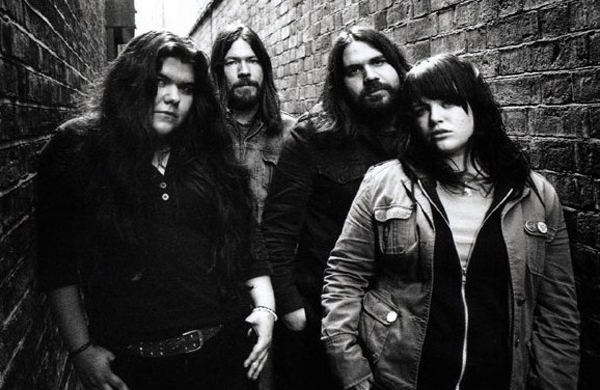
INTERVIEW: The Magic Numbers (UK), July 2010

Seriously, y’all, how fucking underrated are the Magic Numbers? Their self-titled was one of the best debuts of the decade; and they’ve made interesting and wonderful records in the years following; up to and including this year. I dunno what more I have to say. I guess I could also add in that Michele was an absolute sweetheart. I got to meet her and Romeo after the Magic Numbers show at the Metro not long after this interview and she was super-wonderful there as well. This feature’s okay. I think you can tell I’m a fan, which is surely a good thing, right?

– DJY, October 2014

***

It’s been awhile since we’ve heard from The Magic Numbers. Too long, fans will surely add. Thankfully, bassist/vocalist Michele Stodart is quick to clarify on the line from the U.K. that the group were never going to split.

“We all just went away after the tour of the second album [2006’s Those the Brokes],” she observes, “and, y’know, get a break from the band, and each other. There was also our dream of building our own studio, which we’ve always wanted to do. We bought lots of equipment and built it up over about a year and a half – it was amazing because we finally had our own area, our own rehearsal space.” It was here where the band recorded their third album, The Runaway, up until late 2009. Set for release in a matter of weeks, fans are to expect the unexpected when it comes to the band’s new explorative sound.

“When we were rehearsing these songs,” explains Stodart, “we felt like they were too easy; that we could have just gone straight in and recorded them. Let’s try and actually make an album, instead of worrying how we’re going to do it live. So we kind of played around with the set-up of the four of us – thinking ‘okay, this doesn’t need bass; you don’t have to play the drums; [brother and lead vocalist] Romeo doesn’t have to play guitar.’ We mixed it up. It’s still the band, but on the record it’s more than that.”

Another one of the variations included on the record was Michele and vocalist/keyboardist/percussionist Angela Gannon (who completes the lineup with drumming brother Sean) contributing lead vocals to individual tracks. Michele has contributed lead vocals previously, but this the first time a song with her on lead has been chosen as a single. “It’s quite funny,” she comments with a giggle, “and it’s kind of a big deal, too. I’m not too sure how it’s going to go down, but it’s gotten a pretty good reception on the live front, so that’s been a lot of fun.”

On that note, conversation switches to the band’s live shows. This is a band that have established a rock-solid reputation as a must-see live act – they once sold out a 2500-capacity venue in the U.K. even before their 2005 self-titled debut had been released. Recently, the group have gone back on the road to try out the new material as well as pull out some old favourites for patient fans who haven’t seen the group since 2007 at the latest. One of their biggest profile appearances recently has been the annual Glastonbury festival – and Michele couldn’t have been quicker to sing its praises.

“It was amazing,” she recalls fondly. “It was probably one of my favourite Glastonburys because it’s the only one that I’ve been to that wasn’t muddy! No need for wellies whatsoever [laughs]. We kickstarted the festival on the Other Stage and we were so surprised. We didn’t think there’d be many people out to support us, seeing as we’ve been away so long – I was backstage fretting that there’d only be ten people out there and they’d all be passed out. We head out, and it’s packed! That was a really pleasant surprise – an amazing experience.”

Although on somewhat of a smaller scale in comparison to Glasto, a great festival experience is surely on the cards for the band when they take to the stage at the upcoming Splendour in the Grass festival in Woodford. Michele is jolted with excitement when she realises it’s in a matter of weeks – “We’re really looking forward to it!” she enthuses. “We’re only there for a week, but it’s going to be amazing. I hope the weather’s good, obviously; and we’re hoping to explore more of the country while we’re there.” Stodart recalls the band’s enjoyment of their 2005 tour as a part of the Big Day Out, claiming it was a “great chance for us to just spend a lot of time hanging out with the other bands and really take in an overseas country properly for the first time.” There’s little doubt that there will be plenty of great experiences for the band in their whirlwind Australian visit.

As for her own personal projects, Stodart also reports on working on her debut solo album (although it “might be awhile” before we hear anything from it), and also giving birth to her first child – a girl, Maisie. “She’s perfect, really,” says Michele. “She’s really, really cute. A lot of hard work, but she’s still perfect.” Motherhood has certainly had an overwhelmingly positive effect on Michele, but she believes it would be against her nature to dedicate her life to raising Maisie alone.

“It’d kind of be easier to do that,” she says when asked if she would ever pack the whole music thing in, “but I just know that I wouldn’t be happy. Now I’m trying to fit everything in – which is hard work, but I know that what I’m doing is the best for me and for her right now. Music is too big a part of my life for it to be extracted, and I know that she wouldn’t get the best mum possible. Even now, I’m here in the studio working on one of the b-sides for the single while she’s asleep. It’s a different kind of perspective that I’ve got, but I don’t think I could ever give up music.”

INTERVIEW: Seeker Lover Keeper (AUS), July 2011

In 2011, I saw Seeker Lover Keeper five times. I also met all three of them and welled up like an infant. It was three of my heroes from the class of 2004 (go check out all of their releases from that year and thank me later) making remarkably beautiful music together. I couldn’t have asked for anything more. I get really happy when I think about that time in my life – I was super-close to finishing uni, I felt like I was getting somewhere with my writing and I had this goddamn album! So yeah, I spoke to Sarah Blasko and despite seeing all three of these women in public several times since I have never had the guts to go speak to any of them again. I’d probably bore them to death, anyway.

– DJY, October 2014

***

Anyone can dream up a supergroup, but it’s very rare that these fantasies actually come to fruition. It’s also very rare to see it happen of late outside the field of big, burly rock – anyone for Chickenfoot or Hellyeah? It’s interesting that it’s taken something as left-field and unexpected as Seeker Lover Keeper to break this mould. The collaboration between Sarah Blasko, Holly Throsby and Sally Seltmann was first brought to wider attention upon their announcement as a part of the 2011 Splendour in the Grass festival, but the idea of uniting three of Australia’s finest voices has been in the works for quite some time.

“I think I saw Holly play live first – we had a common manager at the time,” says Blasko when asked to recall the origins of her friendship between her counterparts. “Sally, I remember hearing on the radio for the first time and really loving her music – that would have been around the time of her first album. After seeing each other around all the time, I guess it was natural that our friendship developed. We’ve all got a lot in common, and have the same kind of sense of humour. I guess it was only a matter of time.”

It was after a show that Seltmann showed the other two a song she had been working on entitled Rest Your Head On My Shoulder, which would go on to become the final track on the SLK album. “That was really the turning point,” recalls Blasko, “where we all genuinely wanted it to happen. Sally came up with the name, and we scheduled to record not long after all of that.” Considering that Blasko’s last album, As Day Follows Night, was recorded across a month in Stockholm, it certainly came as a notable change to record Seeker Lover Keeper in New York across a fortnight.

“We all wanted to have a really different experience from the last time we all recorded albums,” says Blasko. “We kind of set ourselves a few parameters for this record. We wanted it to be recorded in a really large way. The harmonies, the base of the sound, we just wanted it all to be really natural, really organic. We decided very early on that we wanted it all to be very simple. Kind of like a folk album – I mean, it’s obviously got other elements in there as well, but our sole intention was just to create a simple, beautiful album.”

Mission accomplished. Seeker Lover Keeper is an album of cohesive musicianship, strikingly honest lyrics and kind of freeze-in-tracks, jaw-on-floor close harmony that would normally only come through shared bloodlines. Blasko is particularly enthusiastic about just how liberating it felt to be singing alongside these women, describing it as a “really wonderful” experience. “I think probably the last time I ever really sang like this, in this way, is with my sister when I was really young,” she adds. “In a way, all three of us kind of become children again when we start singing together. It’s a really special, pure thing to do. All of us have had harmonies on our records before – Sally, especially – but I guess we’ve never really had the means to properly replicate our harmonies live. It’s been so fun rehearsing these songs, and finally being able to do it like this.”

Another interesting aspect of Seeker Lover Keeper was its songwriting process. Rather than simply penning songs for themselves to sing, each of the three women wrote songs for the others to sing. Blasko, who sings the most lead vocals out of the three, says that although it was certainly a challenge, the end result was more than rewarding. “I’ve often enjoyed doing covers and things like that,” she comments. “When you sing someone else’s words, you have to put yourself into their mind a bit. You have to draw on your own experience, but you’re struck by these words that you wouldn’t say yourself. It really makes you pay attention to the way it’s been constructed. To me, it was a real pleasure to sing those songs.”

With the role reversed, Blasko emphasises just how amazed she was with what Throsby and Seltmann did with her songs. “It’s really quite amazing to see your songs take on a different meaning when they’re in someone else’s hands,” Sarah notes. “People just have different inflections, different ways of saying the one thing. Hearing Sally do On My Own, I thought she just sounded so sweet and so pure. It was really lovely to hear it done so differently.”

The songs will be brought to life on the band’s first ever tour, extensively taking in most of the east coast of Australia. With Dirty Three drummer Jim White at the helm, Blasko is really excited to be performing songs from the album, as well as each other’s songs. “We’ll definitely throw in a few of our own,” she promises. “It’s going to be really special.”

INTERVIEW: Ben Lee (AUS), February 2009

So, get this: I wasn’t actually supposed to do this interview. Sarah, who still works at FL, had actually put down my name and number to interview Ben Lee instead of Albert Santos, a guy I met through Last.FM of all places I believe. Anyway, I was in the shower when I was told that the call had come through for the interview. I quickly dried off and got them to call me back in 10. Sure enough, I was interviewing Ben Lee on the fly. Not only did I do the interview, I did an entire feature to go along with it – all without being asked. Normally, I wouldn’t be such a pushover – but this was Ben Lee we were talking about!

For context,  Ben has been a hero of mine for around fifteen years. His album Breathing Tornados was the second album I ever bought, and I’ve always had a special place in my heart for the man, his music and the lengths he’s taken it. Yes, he is indeed a “precocious little cunt,” as Bernard Fanning put it. But make no mistake about it – he is my precocious little cunt. This was completely unexpected, but totally awesome.

– DJY, July 2013

***

“I love pop music, this is how we do it…”

With a simple chord progression and an endearingly positive message one thing is exceptionally obvious – Ben Lee is back and as always, in good spirits. Getting on the line with the man feels much more like a conversation with an old friend rather than a scheduled interview. He is chatty, extroverted and at this point of 2009, already somewhat reflective.

“It’s been a very exciting month,” he says contently. “Since getting engaged and really getting focused on the new album, it’s been really creative time for me. I feel like I’m in kind of a new time of my life- a new era.”

Lee is referring to two of his latest ventures- his marriage to actress Ione Skye and working on his upcoming seventh album, The Rebirth of Venus. Both of these events, Ben reveals, have initiated a reflection through his music.

“I think, for lack of a better term, as you get older you get more… balls as an artist. Probably like everyone else, I’ve spent a little too much time at various parts of my career wondering what would make everyone else happy, instead of doing what I wanted to. So as I get older, I care less and less and also realise that all of the best moments in my career have come from when I did exactly what I wanted to; which is a bit of incentive.”

He goes on to name check a cut from the new record that reflects exactly this state of mind – What’s So Bad About Feeling Good? The song, according to Lee, is about “taking the path of least resistance- to risk criticism and ridicule and doing whatever makes you happy.”

Ben’s next exposure to Australian audiences will be as a part of the Big O tour, where he will be performing alongside Scottish chorus masters The Fratellis (of whom Lee is quite the fan) and UK dance-rockers The Music. With him will be his new band, including acoustic musician/brother of Rose, George Byrne, and Jessica Chapnik. Chapnik was Lee’s partner in crime on The Square soundtrack and is also well known for playing notorious Summer Bay killer Sam Tolhurst on Home and Away. “I always tease her about shooting up heroin in a dingy,” he laughs.

The ironic twist for Lee when it comes to The Big O – a tour that takes in all of Australia’s biggest Universities throughout Orientation week – is that he only went to university for two weeks. “Give or take” he cheekily clarifies. “I did Communications at UTS. I didn’t NOT enjoy it, I just…” his tone of voice shifts to the laughing guilt of how one would confess to enjoying a Miley Cyrus song – “…I had an idea for an album. And there was a deadline where you could get your money back.”

Despite his cameo appearance at university, Lee is very much looking forward to the shows. “In the States, I do a lot of colleges. I think it’s kind of a natural time when people really get into music. Basically, you’ve got the independence for the first time in your life to live whatever kind of life you want. but you haven’t yet been corrupted as a part of “grown up” civilisation. It’s a really exciting time to be a music fan.”

So what next? After Rebirth is released and the Big O tour is completed, Lee has two more records in the works. The first is a Noise Addict album with Lou Barlow from Dinosaur Jr which Lee describes as a “really weird, lo-fi, homemade pop record.” The second is a mixtape that has been in the works for several years and consists of a series of songs that Ben has written and gotten other people to perform. Lee truly is a working musician.

Seven albums and ten years later, Ben Lee is incredibly grateful to still be recognised in Australia’s music scene and hopes this recognition will continue with his new release and beyond. “Even people that don’t necessarily like my music know it’s been a part of the culture for a long time,” he explains. “It’s really bizarre having been around for so long and having people tell you that my music was the first album they ever bought, or that they listened to me in high school… it’s still a treat.”

INTERVIEW: Jen Cloher (AUS), November 2008

Funny that I’m revisiting this literally a day after seeing the lady in question live once again. I’ve known Jen for years, and I count her as both a friend and a great inspiration. This interview more or less started that, although we’d briefly met once before in 2007 at a festival featuring Xavier RuddAsh Grunwald and The Audreys. Man, what a time hey? Roots takeover! This interview came prior to the release of Jen’s second studio album, Hidden Hands, which was one of my favourite LPs of 2009. She doesn’t turn out records often, but when she does… look out, son. Them’s some hot rekkids.

This was one of my favourite interviews from around this time – more for what ended up on the cutting room floor, interestingly enough. We were supposed to have a 15-minute interview and we just ended up chatting for a good 30 minutes. She’s just such a warm and interesting person, and I can never be in a bad mood when I’m listening to her music or seeing her live. We’re fortunate to have women like this around, folks. Anyway, enough from me. Let’s read on…

– DJY, July 2013

***

Over the past couple of months, a familiar face has re-entered the collective conscience of Australian music after a momentary lapse into obscurity. For a while, nobody knew where Jen Cloher or her band, the Endless Sea, had gotten to. “I know, right?” the woman herself laughs. “People have been like, – ‘What happened to Jen Cloher? First she was touring and doing shows and then… she wasn’t!’”

The truth of the matter is that there is no big rock star meltdown story, or even in-band fighting. Jen simply took some time away from the limelight to visit her parents. “My parents moved back to New Zealand about fifteen years ago when Mum got work here – they’re Kiwis originally,” she explains. “I made the decision to spend some quality time with them and help out where I could.” Whilst in New Zealand, Jen also came to write the bulk of what would become the Endless Sea’s second album, Hidden Hands. The album’s title – from Cloher’s point of view at least – “sounds a little sinister.” There’s a lot more to it than that, however. “It’s based on a quote by Joseph Campbell, this amazing mythologist. – ‘Follow your bliss, do whatever you are meant to do on this planet. Doors will open where there were no doors before, and you will be lead by a thousand unseen helping hands.’ I love the idea that there are forces beyond what we can see that will help us on our quest.”

Recorded at Woodstock Studios in St. Kilda – which was, up until recently, owned by Joe Camilleri of Jo Jo Zep and the Falcons – Hidden Hands was swiftly recorded live over a period of seven days. The band chose once again to work with engineer Paul McKercher, who has also worked with artists like Sarah Blasko and Augie March. “We worked with him again because we were really happy with his work on the first album,” says Cloher. It is also interesting to note that Cloher herself, as well as singer-songwriter/touring partner Laura Jean, undertook the album’s production duties. “She’s a really great musician,” Jen enthuses. “I’ve stolen her to play some piano and sing, as an honorary member of the Endless Sea.”

Jean’s inclusion in the Endless Sea is one of three new additions to the Endless Sea line-up, which now tallies up as a septuplet. The others are Biddy Connor, a viola/musical saw player who also performs as part of Laura Jean’s Eden Land Band, and Tom Healy, a guitarist that Cloher met during her time in New Zealand. So what’s changed this time around for Cloher’s music? “The differences between the first and second albums are worlds apart,” she says emphatically. Elaborating on this statement leads Cloher to compare and contrast her two works back to back. “Our last album (2006’s ARIA-nominated Dead Wood Falls) was kind of based around lovelorn characters, and it had a distant romantic, blurred-around-the-edges kind of thing about it. It was very much your singer-songwriter album. You could hear that these were songs that I’d written by myself in my bedroom.” And now? “This record is much more of a ‘band’ album because we really developed our own sound a lot with all the touring that we did. When I was writing these songs, I was very conscious that I was writing these songs to a band’s strength.”

Conversation moves to what Jen was writing about during her time in New Zealand. “It’s not about romantic love or lost love. It’s about…” She takes a moment to attempt a vivid description, but shrugs and jokingly comes up with, “…big stuff”. By ‘big stuff,’ of course, Cloher means “mortality, relationships, family, friends, creativity… Really, when I was writing the album, I thought that the most important thing was that these songs were true to me right now.” With this in mind, it must be asked if there is a song that means the most to Cloher out of her sophomore batch. After a moment of thinking out loud (“They all are, so much,” she sighs), she chooses a song called Watch Me Disappear. Written about her mother’s battle with Alzheimer’s disease, she says that the song deals with watching someone very close to you succumb to the illness. “It’s death itself,” Cloher states. “It’s watching someone lose their memory, their concept of time… it’s a really weird disease.”

Certainly, even with a fuller and more realised band sound, this is the sound of a singer-songwriter tacking very personal yet universal issues. If you haven’t yet already, don’t miss an opportunity to bear witness to two of contemporary Australian music’s most formidable talents and hear the beginning stages of what is certain to be a popular release of 2009, Hidden Hands.